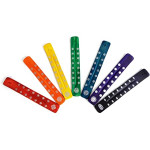
A violin shoulder rest is an important accessory that can significantly affect playing comfort and stability. It attaches to the back of the violin and creates a supporting surface between the instrument and the player's shoulder. Its purpose is to help adapt the violin position to individual body proportions without unnecessary tension in the neck, shoulders and left hand.
A correctly chosen shoulder rest can make daily practice, technically demanding pieces and longer performances more comfortable. However, there is no single model that suits every violinist. Instrument size, shoulder shape, neck length, chin rest and individual playing technique all play a role.
This guide explains the main types of violin shoulder rests, how to choose the correct size, why height adjustment matters and how to attach the rest correctly.
When playing, the violin rests around the collarbone and shoulder area, while the chin rest helps stabilise the instrument with the head. A shoulder rest can fill the space between the back of the violin and the shoulder, creating more comfortable support.
A shoulder rest alone does not guarantee correct posture. Chin-rest height, violin position and overall technique are also important.
Shoulder rests differ in construction, materials, attachment system and adjustment options.
An adjustable shoulder rest is a common choice for both students and experienced players. Most models allow the height of one or both feet to be adjusted, and some also allow width or angle adjustment.
Start with a lower setting and increase the height gradually. The goal is a natural position rather than maximum distance between the shoulder and violin.
Ergonomic violin shoulder rests have a shaped support surface designed to follow the shoulder or collarbone more closely.
However, a strongly curved model will not suit every player, so comfort should always be assessed individually.
Simple foam shoulder rests are a soft alternative to rigid adjustable models.
They may suit players who prefer a lower profile, softer contact or a simple solution without adjustment mechanisms.
Plastic shoulder rests: Often lightweight and easy to adjust.
Wooden shoulder rests: Offer a traditional appearance and natural wood grain.
Composite shoulder rests: Combine strength, flexibility and low weight.
| Type | Main characteristics | Adjustment | Typical use |
|---|---|---|---|
| Adjustable | Rigid construction with adjustable feet | Height, sometimes width and angle | Study, regular practice, performance |
| Ergonomic | Shaped support surface | Depends on model | Individual posture adjustment |
| Foam | Soft and simple construction | Usually limited | Players who prefer soft contact |
| Wooden | Traditional wooden body | Depends on design | Study and performance |
| Composite | Strength, flexibility and low weight | Depends on design | Everyday use |
These categories may overlap. A wooden or composite shoulder rest can also be ergonomic and adjustable.
Compatibility with the instrument size is essential. Some shoulder rests are designed for one violin size, while others support ranges such as 3/4–4/4 or 1/4–1/2.
| Violin size | Typical player | Shoulder rest choice |
|---|---|---|
| 4/4 | Adults and teenagers | 4/4 or full-size compatible model |
| 3/4 | Older children and younger students | 3/4 or confirmed 3/4–4/4 model |
| 1/2 | Younger students | 1/2 or compatible range such as 1/4–1/2 |
| 1/4 and smaller | Younger children | Child-size shoulder rest for the specific violin size |
4/4 violin shoulder rests are intended for full-size instruments. Consider height adjustment range, support shape and attachment system.
A children's shoulder rest should match both the violin size and the child's body proportions.
Most rigid shoulder rests use two feet with protective rubber or similar coverings. Check that the protective parts are clean and undamaged before attaching the rest.
Set the correct width and attach the shoulder rest without excessive force.
The shoulder rest and chin rest work together to influence how the violin is held. The shoulder rest supports the instrument from below, while the chin rest supports contact with the head.
Its weight, construction and attachment may affect instrument vibration in some cases. For most players, however, comfort, stability and natural technique are more important considerations.
Beginners generally benefit from simple use, stable attachment and enough adjustment to suit their body proportions.
Advanced players may pay more attention to angle adjustment, exact support position, flexibility and stability during demanding passages.
Correct size, secure attachment and comfortable adjustment are important when choosing a violin shoulder rest. Clear product information makes it easier to choose an accessory that suits your instrument and individual needs.
Choose a shoulder rest that helps you focus on comfortable playing and your music.
It creates a supporting surface between the back of the violin and the player's shoulder.
No. Some players use traditional shoulder rests, others prefer soft supports or play without one.
Follow the violin size and the manufacturer's compatibility information.
Yes, but only if the manufacturer confirms compatibility with both sizes.
Choose a model marked 1/2 or a compatible range such as 1/4–1/2.
Yes. It allows the height and, on some models, width or angle to be adapted.
High enough for a natural playing position without excessive shoulder lifting or head tilting.
They differ in material, weight, appearance and flexibility. Comfort depends mainly on shape and adjustment.
They can be, but no single shape suits every player.
Damaged or dirty protective fittings can scratch the surface.
Possible causes include incorrect size, poor width adjustment, worn protective coverings or damaged fittings.
Its weight and attachment can influence vibrations in some cases, but comfort and stability are usually more important.
Only if the manufacturer specifically confirms compatibility with both instruments.
Follow the manufacturer's instructions, check the protective fittings and avoid excessive force.
It depends on the case design. Never force the case closed if the shoulder rest presses against the violin.
When it becomes damaged, unstable or no longer suits the violin size or the player's needs.
Yes. Incorrect height, shape or position can contribute to unnatural posture and muscle tension.
Whether you need a 4/4 violin shoulder rest, an adjustable model for a student or a children's 1/2 shoulder rest, focus on compatibility, comfort and adjustment options.
Explore the available violin shoulder rests and choose a model that suits both your instrument and your playing style.
No results returned from filter