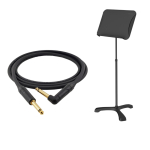
A high-quality guitar cable is often an underestimated, yet vital link in your signal chain. Whether you play electric guitar, bass, or electro-acoustic, choosing the right instrument cable guarantees true-to-tone sound transmission, strong shielding against noise, and long-lasting durability on stage and in the studio.
Yes, significantly. Poor-quality or excessively long cables act as a natural high-cut filter, dulling your high frequencies and introducing unwanted hum or interference. High-grade cables with low capacitance preserve your instrument's full dynamic range and clarity.
It depends on your instrument. Right-angle jacks (90°) are ideal for side-mounted jacks (e.g., Les Paul, Telecaster, SG) as they sit flush against the body to prevent accidental strain. Straight jacks work best for recessed top-mounted jacks (e.g., Stratocaster).
For home practice and studio recording, a 10 to 15 ft (3 to 4.5 m) cable is ideal. For live performances on stage, 18 to 25 ft (6 to 9 m) offers optimal movement. As a rule of thumb: shorter cables retain a cleaner, stronger signal.
Gold does not oxidize or rust, ensuring long-term conductivity and a pristine connection even after years of gigging in humid or harsh environments.