Chekere and cabasa are popular handheld percussion instruments that add a distinctive rustling, rattling, and rhythmically expressive sound to music. Although they differ in construction and playing technique, both instruments allow for the creation of colorful rhythmic accompaniments and sound effects.
They are used in African and Latin American music, as well as in jazz, pop, acoustic ensembles, or group drumming sessions. Thanks to their simple playing principle, they are interesting for both beginners and experienced percussionists.
Chekere, also known as shekere, djabara, or xequerê, has its roots in West African musical tradition. It is made from a dried, hollowed-out gourd, around which a net of beads or seeds is attached.
When shaken or struck, the beads move across the surface of the gourd, creating a characteristic rhythmic sound. The player can hold the instrument by the neck, strike it against the palm, or manipulate the bead net to produce various sound effects.
Chekere is traditionally used to accompany African drums and dance. Over time, it has also found its place in Latin American music, especially in Brazilian rhythms, samba, and other percussion styles.
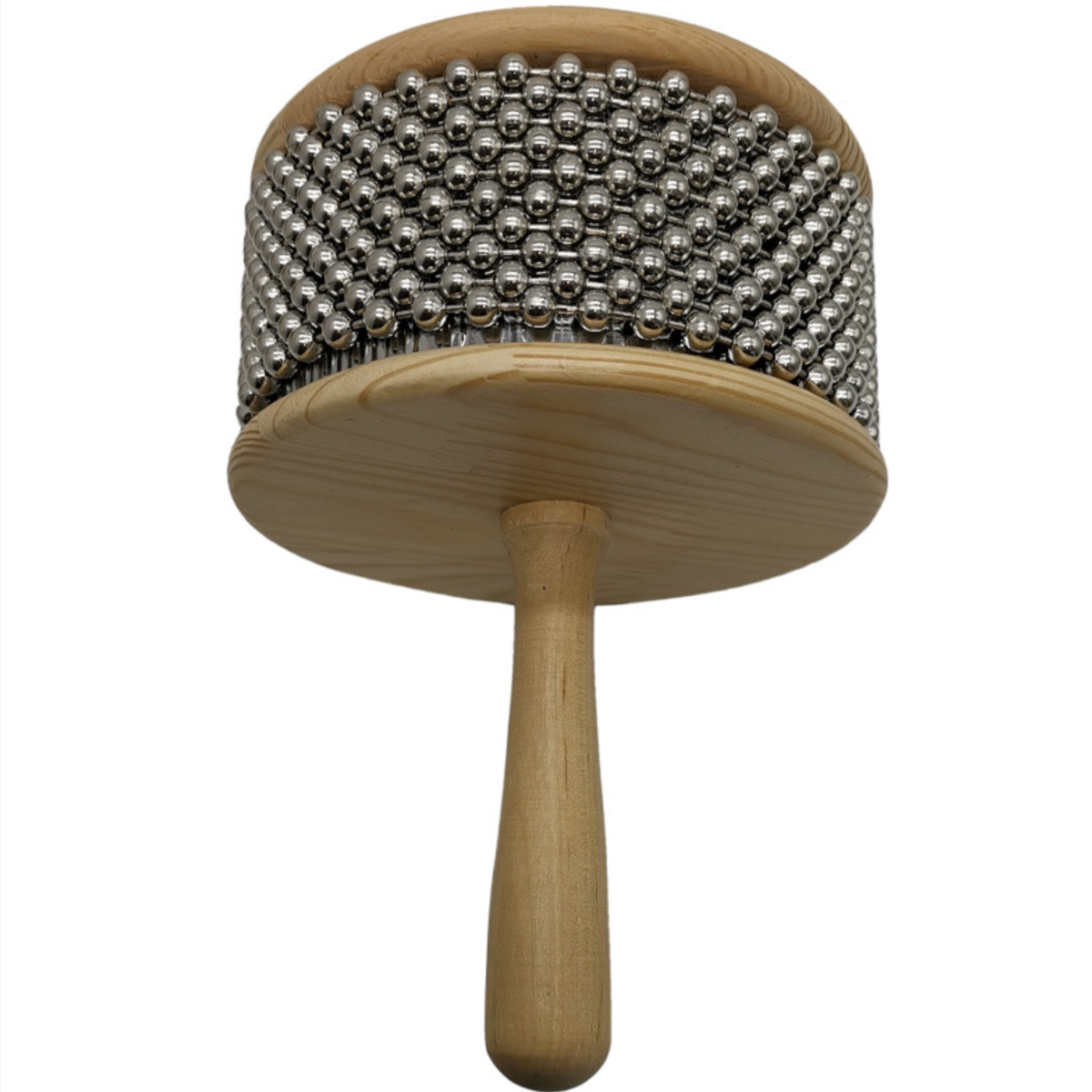
Cabasa is a handheld percussion instrument, whose modern version consists of a wooden or other sturdy cylinder surrounded by a net of steel beads. The instrument has a handle that allows for comfortable holding and precise control while playing.
The sound is produced by moving the steel beads across the surface of the cylinder. By rotating the instrument, moving the wrist, or rubbing the beads against the body of the cabasa, you can create gentle rustling, short rhythmic accents, and pronounced sound effects.
Cabasa is popular in Latin American music, jazz, pop, and for percussion recording. It complements drum kits, conga drums, bongos, and other rhythmic instruments very well.
The main difference lies in their construction and sound character. Chekere has a resonant body made from natural gourd and a net of beads, which creates a rattling and rustling sound when played. Cabasa typically has a cylindrical body and steel beads, producing a sharper, slightly metallic rustling sound.
Chekere is typical for traditional African rhythms and group drumming, while cabasa is a practical addition to modern percussion setups. However, both instruments can be used in many musical styles.
Both instruments are suitable for developing rhythmic sense, movement coordination, and musical creativity. They are used in music workshops, group drumming, and percussion lessons.
In our selection, you will find traditional chekeres as well as modern cabasas in various sizes. Choose your instrument according to the desired sound, playing technique, and musical application.
Chekere is a traditional African percussion instrument made from a dried gourd covered with a net of beads or seeds. The sound is produced by their movement across the surface of the gourd.
Cabasa is a handheld percussion instrument with a cylindrical body and a net of steel beads. When played, it produces a characteristic rustling and slightly metallic sound.
Yes. Both instruments can be used to create simple rhythms even without previous experience. More advanced players can take advantage of a wider range of rhythmic techniques.
If you are looking for a traditional African sound and an instrument for group drumming, chekere is an interesting choice. If you prefer more precise rhythmic accents and a gentler metallic rustling sound, try the cabasa.
SvetBubnov.sk – musical instruments and percussion for beginners and professional musicians alike. We are happy to help you with your selection.