Drum kits offer a practical way to start playing drums or expand your musical equipment. Whether you’re looking for a first drum set for a child, an electronic kit for home practice, or a classic acoustic drum set, the right kit will help you develop rhythm, coordination, and drumming technique.
In this category, you’ll find various types of drum sets – from traditional acoustic drums to electronic drum kits and compact roll-up drums, which are especially suitable for smaller spaces.
When choosing, it’s important to consider the player’s age and experience, available space, desired volume, and the contents of the specific package.
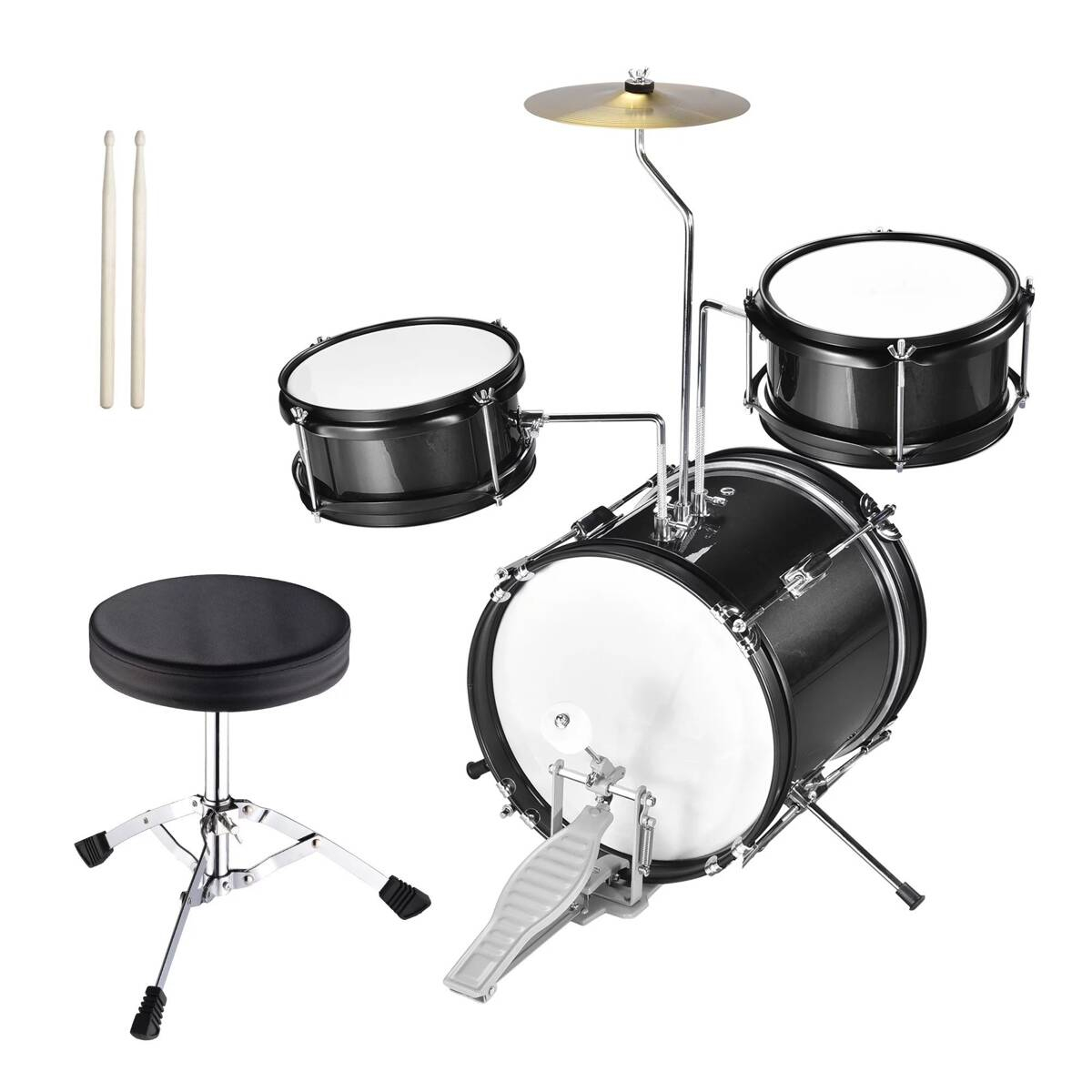
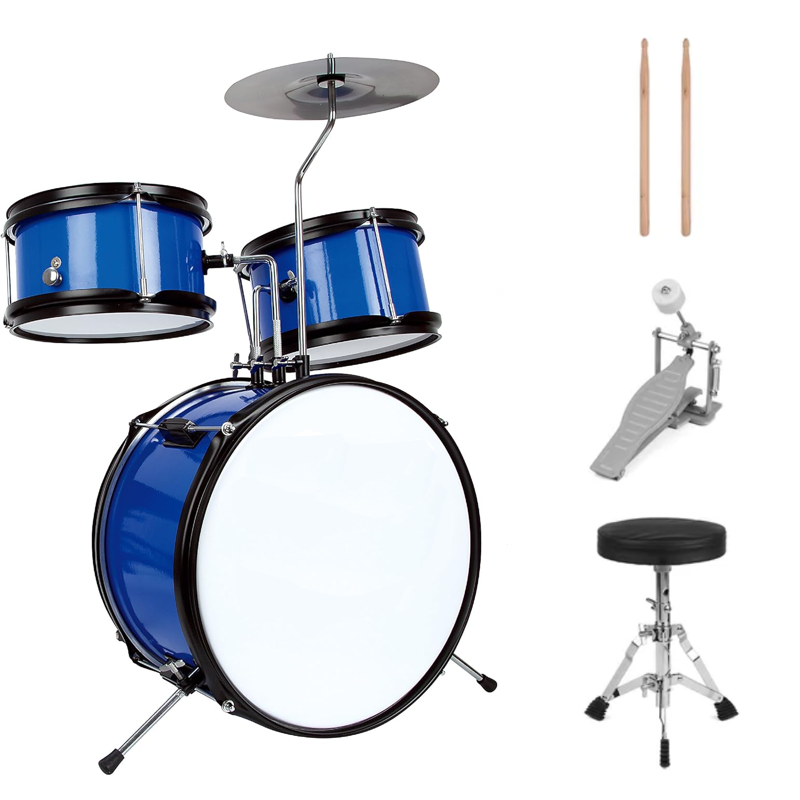
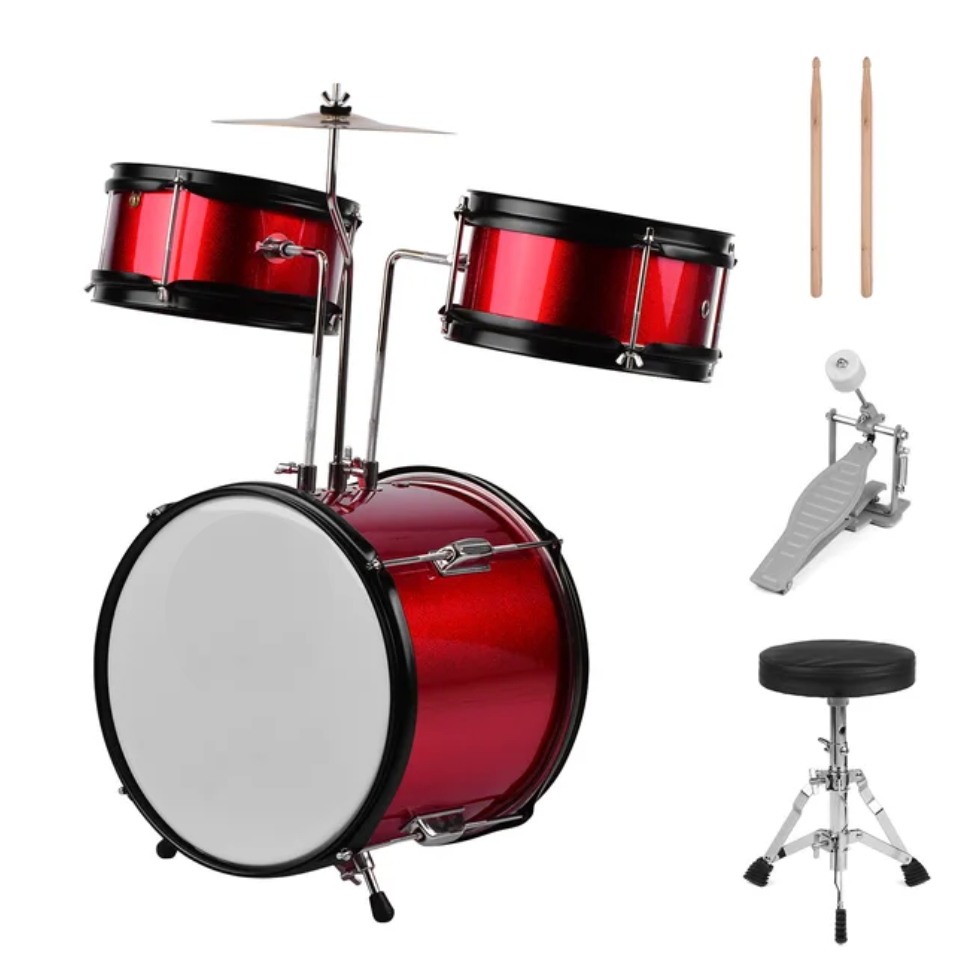
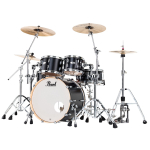
An acoustic drum kit is the traditional choice for drummers who want to play real drums and cymbals. The sound is produced by striking the drumhead or cymbal with a stick, giving the player direct control over dynamics and playing technique.
Acoustic drums are suitable for band rehearsals, concerts, lessons, and regular practice. However, they require enough space, and their volume can be a limiting factor for home use.
Electronic drums use playing pads and an electronic sound module. When struck, the corresponding drum, cymbal, or other percussion sound is triggered.
Many electronic drum kits allow you to adjust the volume or connect headphones. The specific features depend on the equipment of each model.
Electronic drums are a practical choice for home practice, especially when the player needs to control the volume. However, keep in mind that hitting the pads and pedals still produces some mechanical noise.
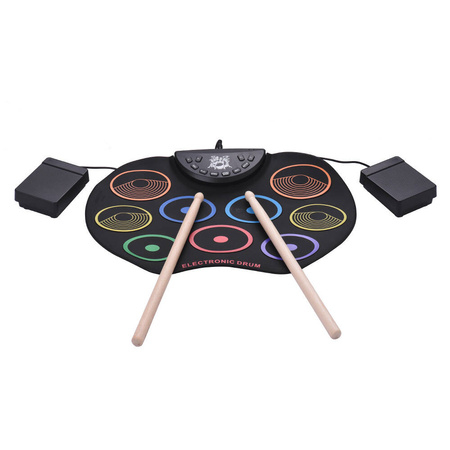
Roll-up drums are a compact alternative to classic electronic drums. Their main component is a flexible playing mat that can be rolled up and easily stored after playing.
Some models also include pedals, sticks, and the option to power via USB or batteries. They are suitable for basic rhythm practice, getting familiar with drumming, and occasional playing.
Thanks to their small size, they are especially popular in households with limited space and for portability.
Drum kits for children are designed with younger players in mind. When choosing, it’s important to consider the child’s age, height, the size of each drum, and the adjustability of the kit.
A children’s drum kit can be the first step toward musical education and helps develop a sense of rhythm, movement coordination, and the ability to focus on a steady tempo.
| Feature | Acoustic Drums | Electronic Drums | Roll-Up Drums |
|---|---|---|---|
| Sound | Natural acoustic | Electronically generated | Electronically generated |
| Volume | Higher | Usually adjustable | Depends on model |
| Space Requirements | Higher | Medium to small | Very small |
| Portability | More difficult | Depends on construction | Easy |
| Playing Feel | Direct response of drumheads and cymbals | Response of electronic pads | Response of flexible mat |
| Typical Use | Rehearsals, concerts, practice | Home practice, lessons | Basic rhythms, travel |
Beginners will appreciate simple controls, a clear layout of playing surfaces, and an appropriately sized kit. Advanced drummers may require more drums, higher-quality pads, wider adjustment options, or more sensitive dynamic response.
Before purchasing, consider where the drum kit will be placed. Acoustic drums need more space and sufficient distance between components.
Electronic drums are usually more compact, while roll-up models can be easily stored after playing.
When playing in an apartment or shared household, the ability to control volume can be important. In such cases, electronic drums with headphone connectivity may be more suitable.
Acoustic drums are naturally louder, so they are often used in rehearsal rooms, music classrooms, and for live performances.
Not every drum kit includes the same accessories. Before buying, we recommend checking whether the package contains:
The specific contents vary by manufacturer and model. The label “drum kit” does not automatically mean that all accessories needed for playing are included.
When starting out on drums, it’s important to learn proper stick grip, steady tempo, basic rhythmic patterns, and coordination of hands and feet.
A drum kit for beginners should offer a comfortable layout of playing surfaces and allow for gradual development of drumming technique.
For initial rhythm practice, compact electronic or roll-up drums can also be used. For systematic drum lessons, however, it’s best to choose an instrument based on your teacher’s recommendation.
Home practice is an important part of musical progress. Regular playing helps develop accuracy, coordination, and the ability to maintain a steady tempo.
For households with limited space, electronic drum kits or roll-up electronic drums may be suitable.
If you have enough space and suitable acoustic conditions, a classic drum kit provides natural contact with drumheads and cymbals.
It’s worth supplementing your drum kit with suitable accessories that increase comfort while playing and help keep your instruments in good condition.
It depends on the player’s age, available space, and learning goals. For systematic learning, acoustic or full-featured electronic drums are suitable. For basic rhythm practice, roll-up models can also be used.
Acoustic drums produce sound naturally by vibrating drumheads and cymbals. Electronic drums use sensors and a sound module.
Often yes, especially models with volume control and headphone output. However, hitting the pads and pedals can still create some mechanical noise.
Roll-up drums are electronic drums with a flexible playing mat that can be rolled up and easily stored after playing.
Yes. When choosing, it’s important to consider the appropriate size, features, and the manufacturer’s age recommendations.
No. The contents of the package vary by model, so we always recommend checking the product description.
For most classic and electronic drum kits, an adjustable drum throne is suitable, as it allows for proper seating while playing.
Many electronic drum kits have a headphone output. For a specific model, however, it’s necessary to check its availability.
Yes. Thanks to the flexible mat and small size, they are practical for transport and occasional playing outside the home.
It depends on the teaching method. For systematic study, it’s best to consult with the teacher to ensure the instrument matches the required playing technique.
A complete kit can be a simpler choice for beginners. Advanced drummers often prefer to select drums, cymbals, and hardware individually.
Most commonly, sticks, a throne, pedals, stands, and depending on the type of instrument, headphones, a metronome, or replacement drumheads.
Whether you’re looking for drums for beginners, electronic drums for home practice, a children’s drum kit, or compact roll-up drums, focus on build quality, features, dimensions, and package contents when making your choice.
The right drum kit will help you develop your rhythmic skills and provide space for musical growth – from your first beats to more advanced drumming techniques.