Rosin is one of the basic accessories required by every string player. Without it, bow hair cannot create enough friction to make the strings vibrate properly. Rosin provides the necessary contact between bow and strings, helping produce a clean and stable tone.
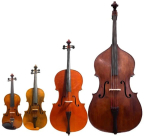
Whether you are learning your first melodies, practising regularly at music school or performing on stage, quality rosin for violin, viola, cello or double bass is an important part of your equipment.
Our range includes light and dark rosins, universal and specialised formulas, as well as practical versions supplied with protective holders or cases. The right choice depends on the instrument, bow characteristics, desired grip and personal preference.
Rosin is a resin-based material applied to bow hair. Its main purpose is to increase friction between the bow and strings so that the strings vibrate consistently as the bow moves across them.
If there is too little rosin, the bow may slide across the strings and produce a weak, delayed or uneven tone. The correct amount helps create reliable contact during soft passages, long legato strokes and faster rhythmic bowing.
Too much rosin can cause excessive dust, resin build-up on the instrument and a harsh sound. Choosing the correct product and applying it in moderation are therefore equally important.
Violin rosin is designed to provide suitable contact between the violin bow and strings. Consider the required grip, bow response and tone character when choosing.
Violinists can choose between light and dark formulas. Light rosins are often harder and can provide a finer grip, while some darker formulas may feel more adhesive. Actual properties depend on the formulation rather than colour alone.
Viola rosin should suit the characteristics of the viola bow and lower-pitched strings. Some products are designed specifically for viola, while others are suitable for both violin and viola.
Look for consistent grip, comfortable note articulation and stable behaviour through dynamic changes.
Cello rosin is designed for cello bows and thicker strings. Cellists often look for a formula that provides enough grip for lower notes while still allowing smooth bow movement.
Stable response, suitable adhesion and control across different bow strokes are important factors.
Double bass rosin generally offers stronger adhesion to work effectively with thicker bass strings. Compared with standard violin rosin, it can have a softer and stickier consistency.
Double bass players often choose according to playing style, string type, desired grip and environmental conditions. Softer formulas should be stored carefully because their properties can change with temperature.
Colour can indicate some characteristics of a particular formula, but it does not determine all of its properties.
Light rosins are often harder in traditional formulations and may offer a finer feeling of grip. They are commonly used by violinists and players looking for smooth bow response.
Dark rosins are sometimes softer and may provide stronger adhesion. They can suit players who prefer a firmer bow grip.
However, not every dark rosin is automatically softer or stickier than a light one.
| Property | Light rosin | Dark rosin |
|---|---|---|
| Colour | Light to amber | Dark amber to brown |
| Typical hardness | Often harder | Often softer |
| Playing feel | Often finer grip | Often stronger grip |
| Typical use | Depends on formulation and instrument | Depends on formulation and instrument |
| Important factor | Intended use and formula | Intended use and formula |
Recommendation: Treat colour as a general guide. Give priority to the intended instrument and the manufacturer's description.
First choose according to whether you play violin, viola, cello or double bass. Each instrument places different demands on bow grip.
Some players prefer a lighter, smoother contact, while others prefer a stronger grip. Follow the specific product description and manufacturer recommendations.
Rosin can behave differently depending on temperature. Softer formulas may become stickier in warm environments.
If you regularly play in different conditions, consider how stable the formula remains as temperature changes.
Beginners generally need a reliable rosin suitable for their instrument. More experienced players may experiment with formulas to suit their technique and desired sound.
If you have sensitive skin or airways, check the ingredients and safety information. Rosin can cause irritation or allergic reactions in sensitive individuals. A low-dust label does not automatically mean hypoallergenic.
Correct application is just as important as choosing the right rosin. Too little may cause slipping; too much can increase dust and negatively affect tone.
A completely new bow with untreated hair may require more rosin during the first application.
There is no universal schedule. Frequency depends on playing time, rosin type, bow hair and environmental conditions.
Watch the bow's response. If it begins to slide or the tone becomes weak and uneven, a small amount may be needed.
If a large amount of dust quickly appears on the instrument, you are probably using too much rosin.
If you are just starting out, choose a rosin intended for your instrument and follow your teacher's advice. Learn to apply it correctly and recognise when your bow has enough.
More experienced musicians can experiment with different formulas to find their preferred grip and response.
It creates the friction required between bow hair and strings.
Choose a product specifically intended for violin or one listed as violin-compatible.
Some products can. Always check the manufacturer's recommended use.
Some universal rosins can, but specialised cello formulas may provide a more suitable grip.
Yes. Double bass rosin is generally softer and more adhesive.
Light formulas are often harder and dark formulas softer, but this is not a universal rule.
A reliable rosin intended for the player's instrument.
As needed, in small amounts.
The bow may slide and the tone may sound weak or delayed.
Yes. Excess rosin can cause dust, resin build-up and a harsher sound.
Apply it evenly along the full length of the bow hair and test the grip regularly.
It depends on playing frequency, application amount and storage conditions.
Its properties can change over time, especially when stored poorly.
In a dry place away from direct sunlight, high temperatures and impact.
Yes. It can cause irritation or allergic reactions in sensitive people.
Gently wipe the strings and instrument surface with a soft, dry instrument cloth after playing.
Yes, but mixing very different formulas may change the playing feel.
Whether you need a lighter grip for violin, a versatile viola rosin, stronger adhesion for cello or a specialised double bass formula, choosing the right product can improve both comfort and instrument response.
Explore the available rosins, compare their properties and choose according to your instrument, playing style and personal preferences.
No results returned from filter